Your battle today
Anxiety
You live on high alert. A tight chest, shallow breathing, an alarm that keeps ringing even when you can’t say why.
What the Stoics say
Epictetus summed it up in one line: it isn’t things that disturb us, but the judgments we make about them. Anxiety almost never responds to what is happening; it responds to what your mind says could happen.
The Stoics don’t ask you to stop feeling the alarm. They ask you to look it in the face, to separate the fact from the opinion, and to come back to the only thing in your hands: what you do in the next ten minutes.
“If you are pained by anything external, it is not the thing itself that troubles you, but your judgment about it. And it is in your power to wipe that judgment out.”
Marcus Aurelius · Meditations, VIII, 47
Your exercise for today · 10 minutes
Fact and judgment
- On a sheet of paper, write down what’s worrying you, exactly as it sounds in your head.
- Below it, make two columns. On the left, only the facts: what a camera could record. On the right, what your mind adds: “it’s going to go wrong,” “I won’t be able to.”
- Circle one single action that is up to you, and do it today. Cross out the rest.
When the alarm comes back, ask yourself: is this a fact or a judgment?
Your volume for this battle
Free · PDF
Download your result as a PDF
Your battle, today’s exercise, and a seven-day plan to print and check off. Leave your name and email and download it right away.
Not your battle? Take the test again
What the Stoics say
Seneca devoted a whole book to anger and called it a brief madness. The man who shouts has already lost, even if he’s right, because he has handed command to whoever provoked him.
The Stoic remedy isn’t to swallow your anger, but to buy time. Between what happens and what you do there is a space, and that’s where it’s decided who is in command.
“The greatest remedy for anger is delay.”
Seneca · On Anger
Your exercise for today · all day
The ten-second pause
- Pick a braking phrase: “Not yet.”
- Next time you feel the heat in your face, say it to yourself, unclench your hands and count ten breaths before you speak.
- Tonight, write down one time you managed it and one time you didn’t. No punishment: just the record.
The pause isn’t weakness. It’s the moment you take back command.
Your volume for this battle
Free · PDF
Download your result as a PDF
Your battle, today’s exercise, and a seven-day plan to print and check off. Leave your name and email and download it right away.
Not your battle? Take the test again
Your battle today
Overthinking
You analyze everything a thousand times. You have the reasons for and against, and still you don’t decide. At three in the morning, your mind is your worst enemy.
What the Stoics say
Marcus Aurelius wrote it to himself: stop arguing about what a good man should be, and be one. Thinking is useful until it becomes an elegant way of not acting.
For the Stoics, clarity doesn’t come before action: it comes with it. Every extra lap around the same idea doesn’t bring you closer to the answer; it only takes you further from the day.
“No more arguing about what a good man should be. Be one.”
Marcus Aurelius · Meditations, X, 16
Your exercise for today · 10 minutes
The ten-minute decision
- Write the decision you’ve been putting off in a single line.
- Set a ten-minute timer and write down what you know, not what you fear.
- When it goes off, decide. And take the first physical step within the hour: a message, a phone call, a date on the calendar.
An imperfect decision made today is worth more than the perfect one that never comes.
Your volume for this battle
Free · PDF
Download your result as a PDF
Your battle, today’s exercise, and a seven-day plan to print and check off. Leave your name and email and download it right away.
Not your battle? Take the test again
What the Stoics say
Seneca wrote that life isn’t short: we make it short by wasting it. Memento mori, “remember that you will die,” wasn’t a sad idea for the Stoics, but a compass.
When you look at the time you have left, what matters falls into place on its own, and what doesn’t loses its pull. Purpose isn’t found by waiting: it’s built by choosing, every week, what you spend your life on.
“It is not that we have little time, but that we waste a great deal of it.”
Seneca · On the Shortness of Life, I
Your exercise for today · 15 minutes
The last year
- Imagine you have one year left to live. Write down three things you’d do without fail.
- Next to each one, note how many hours you gave it last week.
- Pick one and give it an hour this week. Not “someday”: with a day and a time on the calendar.
You don’t need to find the meaning of your life today. You need to give an hour to what matters.
Your volume for this battle
Free · PDF
Download your result as a PDF
Your battle, today’s exercise, and a seven-day plan to print and check off. Leave your name and email and download it right away.
Not your battle? Take the test again
What the Stoics say
Marcus Aurelius marveled at the same thing almost two thousand years ago: each of us loves himself more than anyone, yet values other people’s opinion more than his own. Epictetus said it more plainly: what others think of you isn’t up to you; what you do is.
Every time you need applause to feel at ease, you hand command of your state of mind to someone else. Taking it back starts with something small: a no, said in time.
“I have often wondered how it is that every man loves himself more than all others, yet sets less value on his own opinion of himself than on the opinion of others.”
Marcus Aurelius · Meditations, XII, 4
Your exercise for today · 5 minutes
A clean no
- Think of a request you’d accept today just to avoid looking bad.
- Write your answer in one sentence, with no excuses or long apologies: “I can’t this time.”
- Say it today. Afterward, write down what you were afraid would happen, and what actually happened.
A respectful no doesn’t push away the people worth keeping. It brings you closer to yourself.
Your volume for this battle
Free · PDF
Download your result as a PDF
Your battle, today’s exercise, and a seven-day plan to print and check off. Leave your name and email and download it right away.
Not your battle? Take the test again
Your battle today
Fear of the future
You worry about what’s coming: work, health, money, family. You picture disaster in such detail that it freezes you today.
What the Stoics say
Seneca warned his friend Lucilius that we suffer more in imagination than in reality. Fear of the future feeds on scenes that haven’t happened yet, and that almost never do.
The Stoics had a training for this: rehearsing the worst on purpose, on a small scale, to prove it can be borne. The man who has already tasted discomfort by choice fears tomorrow less.
“There are more things that frighten us than crush us; we suffer more often in imagination than in reality.”
Seneca · Letters to Lucilius, 13, 4
Your exercise for today · 10 minutes
Rehearsing the worst
- Write down the specific fear that weighs on you most today.
- Below it, answer three questions: What is the worst that could realistically happen? What would you do the next day if it did? What can you do today to prepare?
- Take the step from your third answer today, however small.
Fear grows in what you don’t look at. Written on paper, it almost always shrinks.
Your volume for this battle
Free · PDF
Download your result as a PDF
Your battle, today’s exercise, and a seven-day plan to print and check off. Leave your name and email and download it right away.
Not your battle? Take the test again
What the Stoics say
Epictetus asked his students how long they would put off demanding the best of themselves. For the Stoics, discipline isn’t a trait you’re born with: it’s a muscle trained with small promises kept every day.
You don’t need more motivation. You need to do one small thing today even if you don’t feel like it, and another tomorrow. That’s how character is forged: one kept day at a time.
“How long will you wait before you think yourself worthy of the best?”
Epictetus · Enchiridion, 51
Your exercise for today · 5 minutes
The minimum promise
- Pick one single action for today, so small you have no excuse: ten push-ups, ten minutes of reading, your bed made.
- Write it down with the time you’ll do it.
- Do it and mark an X on the calendar. Tomorrow, again.
The goal isn’t the action. The goal is not to break the chain.
Your volume for this battle
Free · PDF
Download your result as a PDF
Your battle, today’s exercise, and a seven-day plan to print and check off. Leave your name and email and download it right away.
Not your battle? Take the test again
What the Stoics say
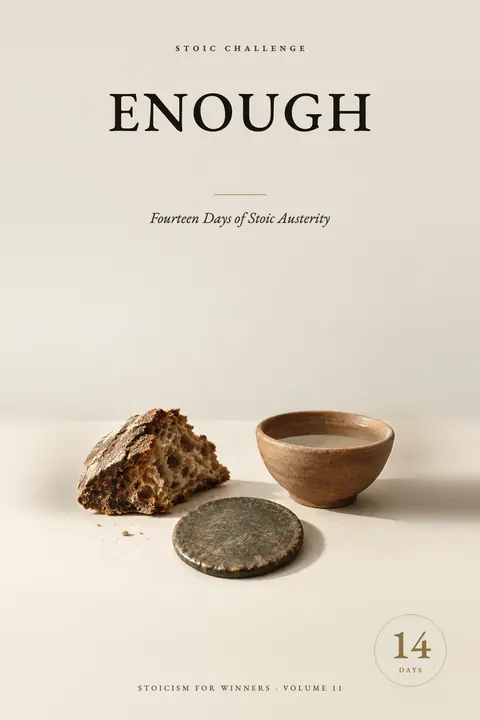
Seneca was one of the richest men in Rome, and still he practiced living on little, so that wealth would never rule him. He put it this way: the poor man isn’t the one who has little, but the one who craves more.
The problem is almost never how much you earn; it’s how much you spend to fill something money can’t fill. Stoic frugality isn’t stinginess: it’s command over your desires.
“It is not the man who has too little who is poor, but the one who craves more.”
Seneca · Letters to Lucilius, 2, 6
Your exercise for today · 10 minutes
Facing your accounts
- Open your bank account and write down your last ten expenses.
- Mark each one: necessary, useful or emotional.
- Pick one emotional expense and don’t repeat it for seven days. Set that money aside and write down the amount.
What you don’t look at rules you. What you look at, you start to command.
Your volume for this battle
Free · PDF
Download your result as a PDF
Your battle, today’s exercise, and a seven-day plan to print and check off. Leave your name and email and download it right away.
Not your battle? Take the test again
What the Stoics say
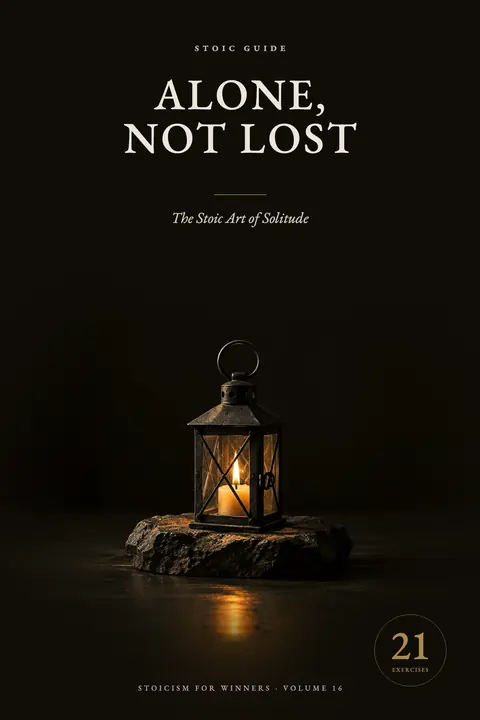
Marcus Aurelius, the most powerful man of his time, wrote to himself that there is no quieter refuge than one’s own inner self. For the Stoics, solitude can be a void or a fortress: it depends on what you do with it.
Being alone without being lost can be learned. And learning it gives you back to other people in a different way: not out of need, but by choice.
“Nowhere does a man retreat to greater quiet or more freedom from trouble than into his own soul.”
Marcus Aurelius · Meditations, IV, 3
Your exercise for today · 35 minutes
Half an hour with yourself, and one message
- Today, thirty minutes alone with no screen: walk or write.
- Write down in three lines how you really are.
- Message someone you care about, expecting nothing in return: “I was thinking of you. How are you?”
Chosen solitude makes you stronger. The kind you hide weighs you down.
Your volume for this battle
Free · PDF
Download your result as a PDF
Your battle, today’s exercise, and a seven-day plan to print and check off. Leave your name and email and download it right away.
Not your battle? Take the test again
What the Stoics say
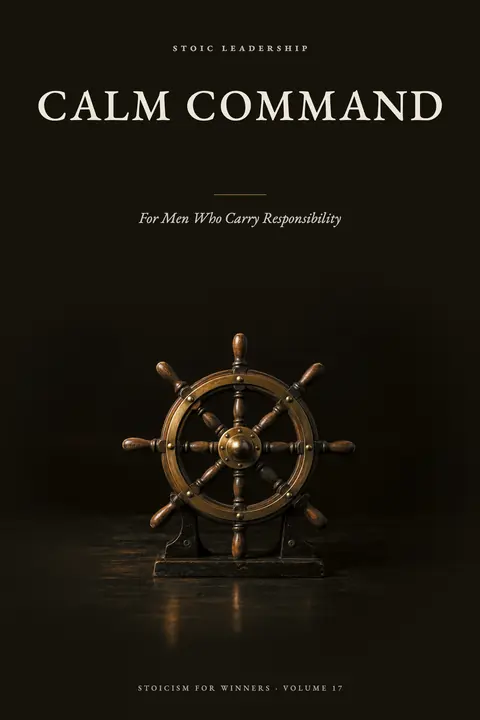
Marcus Aurelius ruled an empire and reminded himself not to turn into a Caesar: not to let the office stain his character. For the Stoics, commanding others starts with commanding yourself.
The man who governs himself can demand without shouting, correct without humiliating, and decide without letting the pressure decide for him. Your people don’t follow your orders: they follow your example.
“Take care that you are not turned into a Caesar, that you are not dyed in the purple.”
Marcus Aurelius · Meditations, VI, 30
Your exercise for today · 10 minutes
The conversation you’ve been avoiding
- Pick one person on your team or at home with whom you have something unresolved.
- Prepare three sentences: the fact, what you expect, and how you’ll help them.
- Have the conversation today, face to face and in a low voice. Listen more than you talk.
Authority isn’t shouted. It’s shown, calmly.
Your volume for this battle
Free · PDF
Download your result as a PDF
Your battle, today’s exercise, and a seven-day plan to print and check off. Leave your name and email and download it right away.
Not your battle? Take the test again
 No. 03 · Wine EditionSteel Calm